
Majdi Aljadayeh ,MD Consultant
Head of Medical Oncology , Hematology &SCT Dep.
Military Cancer Center.
Royal Medical services
•The mission of RMS
•Introduction to Auto Immune diseases
•Living with an autoimmune condition can be a challenging
Examples of Autoimmune Diseases
What’s a list of autoimmune diseases?
Some common autoimmune diseases include:
Diseases of the joints and muscles:
• Psoriatic arthritis.
• Rheumatoid arthritis (RA).
• Sjögren’s syndrome.
• Systemic lupus erythematosus (Lupus, SLE).
Diseases of the digestive tract:
• Crohn’s disease.
• Celiac disease.
• Ulcerative colitis.
Diseases of the endocrine system:
• Graves’ disease.
• Hashimoto’s thyroiditis.
• Addison’s disease.
Diseases of the skin:
• Dermatomyositis.
• Psoriasis.
Diseases of the nervous system:
• Chronic inflammatory demyelinating polyneuropathy (CIDP).
• Guillain-Barre syndrome.
• Multiple sclerosis (MS).
Other diseases:
• Myasthenia gravis.
• Autoimmune vasculitis.
• Type 1 diabetes.
• Pernicious anemia.
• Vasculitis.
•Prevalence of Auto Immune disea
•UNMET NEEDS by targeted medical therapies
•Pathophysiology of Auto Immune Diseases:
    - Autoimmune diseases develop when the auto-reactive
     B lymphocytes (autoantibodies) and T lymphocytes cause
     a pathological and/or functional damage to the organ/
     tissue containing the target autoantigen

     - Autoimmune reactions reflect an imbalance between
        effector and regulatory immune responses
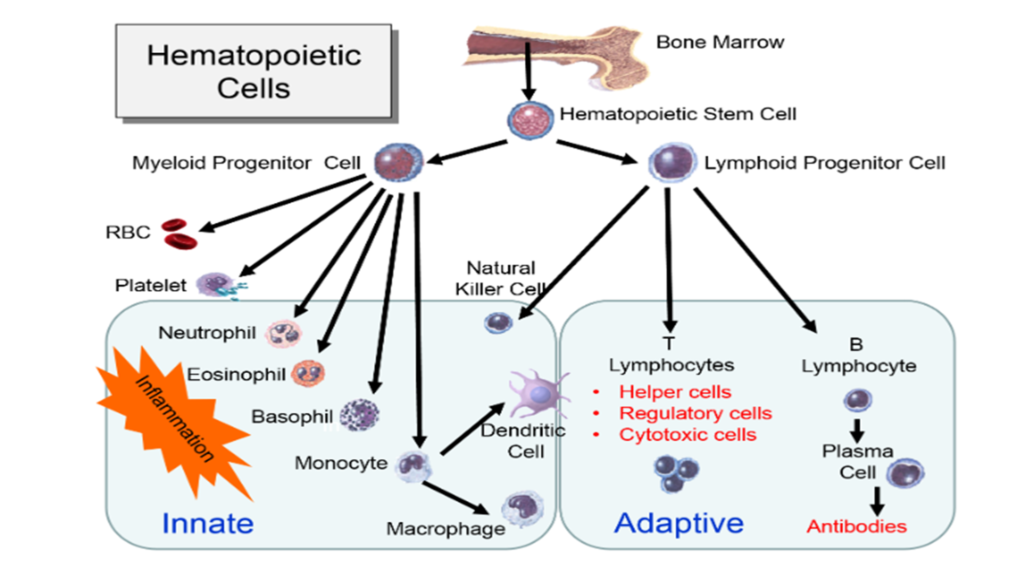
* Rational of Autologous Hematopiotic Stem Cell Transplant In Autoimmune diseases :
-Bone marrow is not only a generative hematopoiticbut also
antigen-responsive immune organ.
-It is also a major storage site for antigen-specific memory B
and T cells
*The combination of lymphotoxic chemotherapy, such as cyclophosphamide and antithymocyte globulin, leads to a profound and long-lasting lymphopenia and persistently reduced levels of putative pathogenic autoantibodies
*there is growing evidence that autologous HSCT can also re-establish immunological tolerance
*autologous HSCT leads to an increased number of regulatory, T cells which are important in the preservation of tolerance;
*Antithymocyte globulin directly targets long-living, autoantibody-producing plasma cells by complement-mediated lysis and apoptosis
*People with both haematological malignancies and autoimmune diseases sometimes go into remission from both conditions after undergoing bone marrow transplantation
Multiple Sclerosis (MS )
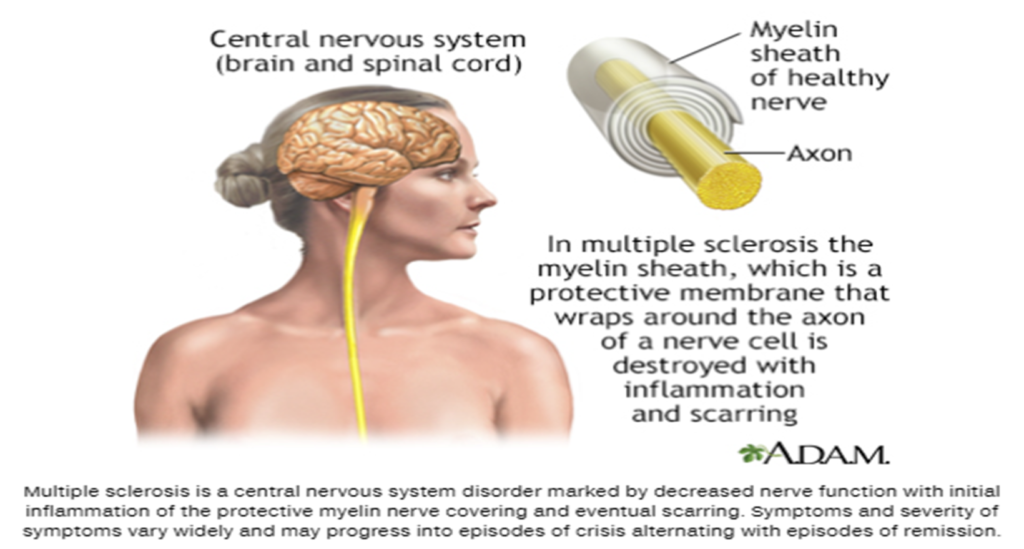
* Multiple sclerosis (MS) is the most common immune-mediated inflammatory demyelinating disease of the central nervous system ,
characterized pathologically by multifocal areas of demyelination , Axonal injury is a prominent pathologic feature especially in the later stages.
*The risk of developing MS in the general population is approximately 0.1%
*Multiple sclerosis can be a particularly debilitating disorder
Inclusion criteria :
– Age 18-60 years.
– have frequent relapses and MRI scans showing new or active lesions
– are early on in their disease course non reaching the stage of no return.
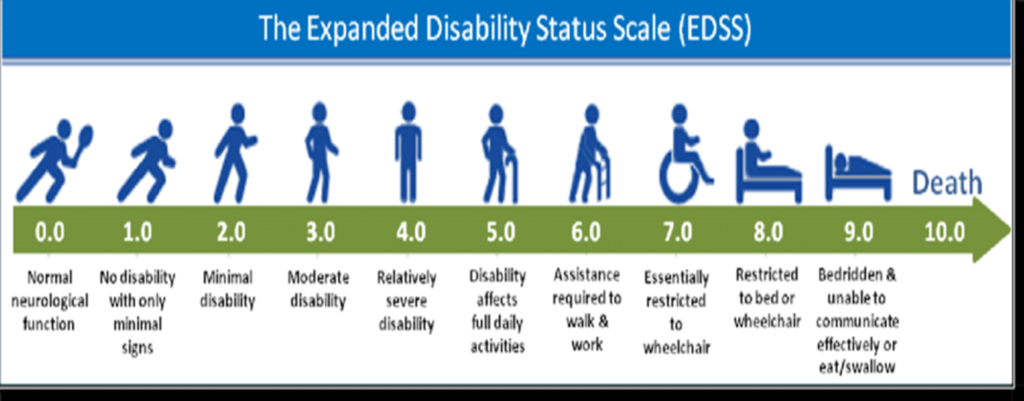
– don’t have significant disability – measured by the EDSS (Expanded Disability Status Scale) EDSS score of 3-6
What do the points on the scale mean?
0.0 examination shows everything is normal
1.0 no disability, very small sign that one function isn’t normal
1.5 no disability, very small signs that more than one function isn’t normal
2.0 very small disability in one function
2.5 mild disability in one function or very small disability in two functions,
3.0 moderate disability in one function or mild disability in three or four functions. No problem walking
3.5 moderate disability in one function and mild or moderate disability in several other functions. No problem walking
4.0 significant disability but you can walk without an aid for 500 metres
4.5 significant disability but you’re up for much of the day. You can still work but might need some help. You can walk 300 metres without an aid
5.0 disability gets in the way of daily activities but you can walk without an aid for 200 metres
5.5 disability rules out full daily activities. You can walk 100 metres without an aid
6.0 you can walk 100 metres with a stick or crutch, with or without rests
6.5 you can walk 20 metres with the two aids (crutches or sticks) without stopping for rests
7.0 essentially you must use a wheelchair but are active all day. You can’t walk more than 5 metres even with an aid
7.5 you can only take a few steps. You use a wheelchair and may need help getting in and out of it. You may need a motorised wheelchair
8.0 basically you need to be in a chair, wheelchair or bed. You may be out of bed much of the day. You can use your arms
8.5 basically in bed much of the day. You still have some use of your arms
9.0 in bed all the time but you can communicate, eat or swallow
9.5 in bed but you can’t communicate, eat or swallow
10 death due to MS
– If a patient has previously received a cytotoxic agent (mitoxantrone, cyclophosphamide etc.) they must have normal bone marrow morphology and cytogenetics before
being considered eligible.
– Normal cardiac, renal, pulmonary, hepatic or other organ function reserve
Exclusion Criteria:
*Patient with any active or chronic infection (herpes simplex virus, varicella-zoster virus, cytomegalovirus, EB virus, human immunodeficiency virus, hepatitis virus, syphilis, etc.)
*Patients having received a cytotoxic agent within one month of enrolling in this study.
* Patients with a malignant tumor currently or within the last 5 years;
•
* Patients whose life expectancy is severely limited by another conditions.
* Pregnancy or risk of pregnancy.
*Patients unable to give written informed consent in accordance with research ethics board
What are the side effects of HSCT?
*Compared to other DMTs, HSCT has among the highest risk of side effects, especially serious ones:
*an increased long-term risk of developing infections
*an increased risk of developing cancer and autoimmune conditions, such as thyroiditis
*early menopause
*fertility problems
*Chemotherapy – part of the HSCT procedure – has its own side effects too. These include an increased risk of bleeding and bruising, fatigue, loss of appetite and hair loss.
Meta alalysis
50 studies with a total of 4831 patients with MS :
-significant decrease in EDSS score after treatment
– relapse rate was also significantly reduced after AHSCT compared to the pretreatment period , 81% of patients remained relapse-free
– progression-free survival after treatment was 73%
– MRI activity-free survival was 89%
– The overall survival after transplantation was 94%
– 4% of patients died from transplant-related causes
Evidence is continually evolving for auto-HCT in autoimmune diseases predominantly in MS